


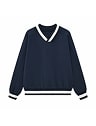


FINISH YOUR GARMENTS WITH CONSISTENT BRANDING
Clothing labels and packaging
Bring labels, tags and packaging together around the customer experience you want. Connect artwork and product information with garment application, folding and packing so the brand details stay consistent across sizes, colors and the finished order.
Start with brand artwork, garment variants and the way you want customers to receive the product.
A consistent brand reference
Keep logo files, label specifications and packaging artwork tied to approved versions.

Clear product identification
Connect sizes, product codes, supplied barcodes and packing ratios with the correct garment variants.

A defined packed result
Agree the materials, attachments, folding and carton instructions required at dispatch handover.
Explore the service
Connect labels, tags and garment packaging
Share the brand artwork, garment details and preferred components. Label construction, application, product data and packing are reviewed together, with the confirmed materials, proofs and sample work identified in the quote.
Woven and printed brand labels
Choose the label construction for the artwork, garment and wearing comfort. Woven and printed labels reproduce detail differently, so review dimensions, material and placement together.
- Woven brand labels and logo labels
- Printed fabric and cotton labels
- Brand patches and component references
- Label size, color and artwork proofs
Heat-transfer and tag-free branding
Heat-applied branding is a separate application choice from a sewn label. Match the transfer to the textile and care requirements, then review readability, feel and attachment on a representative garment.
- Heat-transfer neck labels
- Tag-free logo or product information
- Suitable transfer and application requirements
- Pressing, adhesion and care checks
Size, care and product information
Keep the supplied product information consistent across labels, tags and packaging. Confirm the data and destination requirements before production; an attractive label does not by itself establish that the information is correct.
- Size and variant labels
- Fiber composition and care information
- Origin and other required supplied text
- Language versions and artwork-data checks
Folds, locations and label application
Decide how the label will sit in the garment before ordering the component. A fold or seam location changes the visible design area and the attachment needed.
- Flat and end-fold labels
- Centerfold, loop and mitre-fold labels
- Hem tags and external brand placements
- Sewn-in, seam-inserted or suitable heat-applied attachment
Hangtags, tickets and removable details
Use removable components to carry the brand story and the information needed for selling and identification. Connect the artwork with the actual product and variant data.
- Branded hangtags and price tickets
- Barcode or supplied QR-code artwork
- Strings, seals and tag attachments
- Size stickers and removable product identifiers
Bags, wraps, boxes and inserts
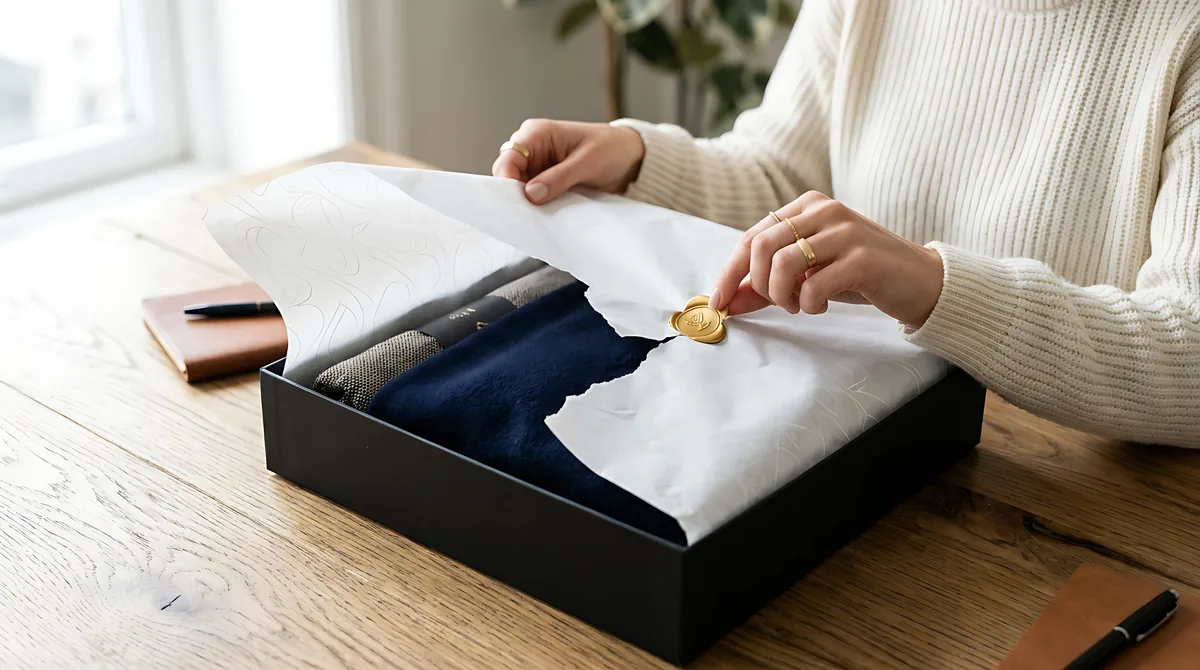
Choose packaging around the garment size, protection and presentation. Material descriptions or recycled-content requests should be supported by the relevant specification, rather than assumed from the appearance of a package.
- Garment bags and protective unit packs
- Tissue, wraps and belly bands
- Folding boxes, sleeves and mailers
- Brand cards, inserts and packaging-material references
Variant coding and assortment instructions
Make the packing instructions match the actual size and color quantities. Identifiers should lead to the right product data, whether they appear on a garment label, tag, sticker or carton.
- SKU and variant mapping
- Barcode or QR print-readability checks
- Size/color assortment and pack ratios
- Unit-pack and carton-label data
Folding, packing and carton handover
Specify how each garment and the complete order should be presented. Reconcile the finished quantities and carton identification with the packing list, and make exceptions visible before handover.
- Folding and unit presentation
- Single-product or mixed-variant assortments
- Carton quantities, marks and packing lists
- Packed sample and final quantity review
Which part of the presentation needs a brief?
Choose the closest starting point and keep the garment, artwork and product data connected.
Start with the label as a physical component.
Share the logo, label dimensions, material and placement. Identify size, care or product information that changes by variant, and the physical sample required for approval.
- Brand artwork and finished label size
- Material, fold and placement
- Approved variant and product information
Give removable details a clear role.
Specify the tag, ticket or insert and its message. Confirm artwork, stock, fastening and supplied product data so style, size and color identifiers stay consistent.
- Hangtag or insert dimensions and artwork
- Stock and attachment reference
- Supplied product codes and barcodes
Define how the finished order is organized.
Show the required unit pack and carton arrangement. Include folding, labels, size/color ratios and destination requirements; define both packaging materials and packing work.
- Unit packaging and protection
- Variant ratios and carton marks
- Packing list and handover instructions
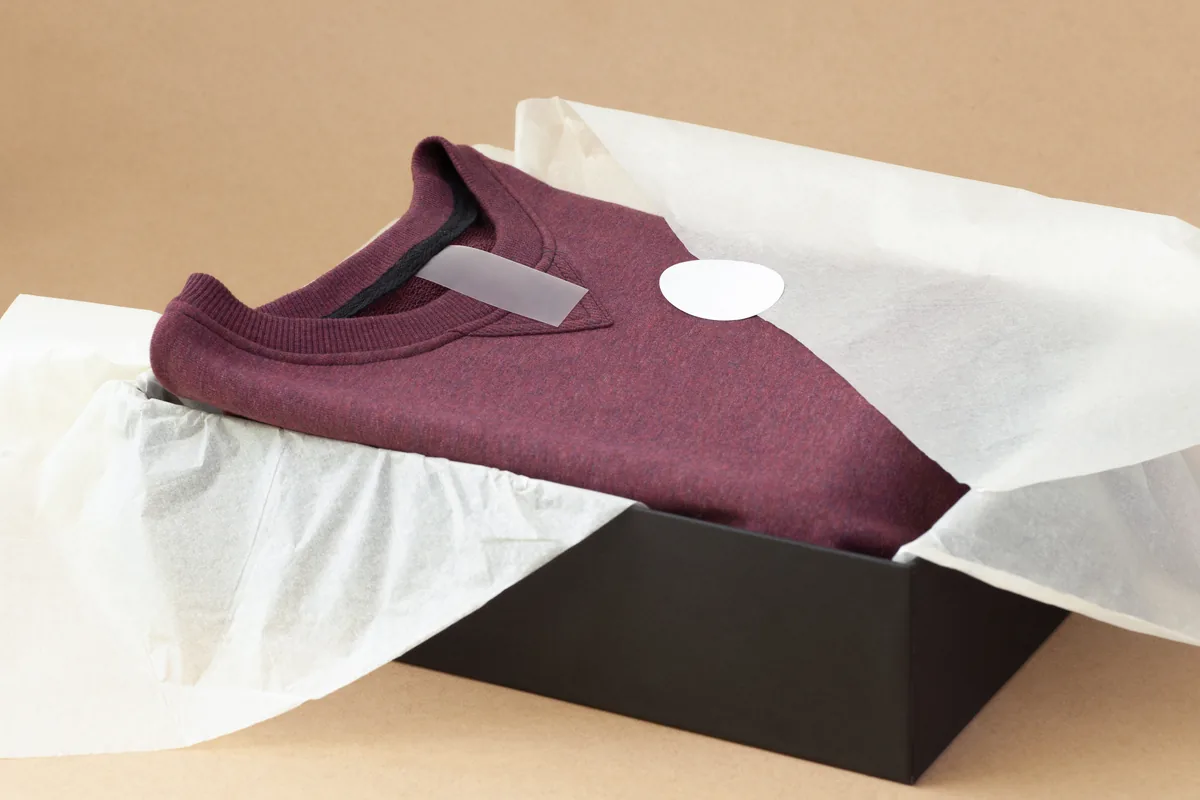
Prepare the branding and packing information
Send the references together so artwork, product data and the physical presentation can be reviewed as one job.
Brand artwork
Send current logo and artwork files, colors and dimensions. Identify the approved revision and provide a finished-look reference when available.
Label specifications and data
List label types, materials, folds, placement and attachment. Supply approved sizes, product details and care information, identifying data that changes by variant.

Packaging specifications
Describe bags, boxes, mailers or inserts with dimensions, materials and printed areas. Share available dielines and documentation for any required material attribute.
Quantities and packing plan
List style, color and size quantities, supplied SKU or barcode data, packing ratios, carton instructions and the destination or handover required.
Share approved product information rather than asking artwork preparation to invent care, content, origin or barcode data. The quote defines sourcing, sampling, attachment and packing work for the project.
From brand artwork to packed garment presentation
Connect labels, tags and packaging with the garments they identify. Coordinate sewn-in label placement with cut, sew and trim production, and carry any embroidery and embellishment references into the final product and variant information.
Good questions
Private label and packaging questions
Clear answers before the work begins.
Can I supply my own labels and packaging?
Share specifications, quantities and intended use before sending components. Confirm compatibility, attachment and packing work. Identify shortages so supplied items are separated from materials that need sourcing.
Who approves care and product information?
Provide approved information for the finished product and intended destination. Agree who checks the text and variant mapping. Label content should reflect the actual materials, decoration and processing.
Can packaging carry a recycled or other material claim?
State the required attribute and request supporting material documentation. Choose the specific option against that evidence, rather than treating its color or appearance as proof of a claim.
Can different sizes or colors be packed together?
Supply exact assortment or carton ratios. Define unit labels, mixed or single-variant cartons, carton marks and packing-list needs. Agree the packing scope and check method for that arrangement.
Your project, clearly defined
Plan the finished presentation
Send brand artwork, label or packaging references, product information and the quantity breakdown. Add size/color identifiers and packing instructions, and identify any components you will supply so printing, application and packing can be reviewed together.
Send what you have and mark what still needs development. The quote will identify the next steps for your product.